

Agri-Food
Business management
Civil engineering and urban infrastructure
Aggregates - Determining the Petrographic Index...
Aggregates – Recycled Materials Produced from Concrete Residues
Civil Engineering Work - Aggregates
Community Planning in Northern Regions
Construction - General Administrative Documents
Geotechnical Site Investigations for Foundations of Building or Structure in Permafrost Zones
Good Practice Guide on Public Works
Grates, Covers, Frames, Catch Basin Traps and Valve Boxes — Grey-Iron and Ductile-Iron Castings
Inflow and Infiltration - New Sanitary Sewer Systems
Inflow and Infiltration - Existing Sanitary Sewer Systems
Municipal Drinking-water Distribution System Design Handbook
Municipal Sewer System Design Handbook
Pipes
Concrete pipes and connections – Evacuation of Sanitary Wastewater and Storm Water (2622-126)
Ductile Cast Iron Piping and Joints – Drinking Water and Sewer Line Systems (3623-085)
PVC pipe and fittings – Buried sewers (3624-130)
PVCu pipe and fittings – Pressure water supply and distribution (3624-250)
PVCu pipe and fittings – Subsurface sewers and land drainage (3624-135)
Single-Wall PE Pipe and Fittings – Surface Water Evacuation, Soil Drainage and Culverts (3624-110)
PE Pipe and Fittings - Drainage (3624-115)
PE Pipe and Fittings – Storm Sewer, Culverts and Soil Drainage (3624-120)
Rock Blasting - Preventing Carbon Monoxide Poisoning
Safety of Products and Materials in Contact with Drinking Water
Soils
Soils - Size Analysis of Inorganic Soils
Soils - Determination of Density of Solid Particles
Soils - Determination of Liquid Limit by the Casagrande Apparatus and Determination of Plastic Limit
Soils - Determination of Liquid Limit by a Fall Cone Penetrometer and Determination of Plastic Limit
Soils - Determination of In-Place Density of Soil Using an Elastic Membrane
Soils - Determination of In-Place Density of Soil Using a Flexible Membrane (Water Volume)
Soils - Determination of In-Place Density of Soil Using the Sand-Cone Method
Determination of Water-Density Relation - Vibrating Hammer Test
Soils - Determination of the Water-Density Relation - Modified Effort Compaction Test
Soils - Determination of Water Content
Soils - Determination of the Coefficient of Permeability at the End of a Drill Casing
Soils - Determination of the Coefficient of Permeability by the Lefranc Method
Soils - Dynamic Cone Penetration Test
Soils - Standard Penetration Test (STP) and Sampling with a Split-Barrel Sampler
Construction
Customer service
Environment
Compostable products (packaging and packaging materials)
Composts - Determination of Respiration Rate
Liming Materials from Industrial Processes
Mineral amendments – Natural limestone
Onsite Domestic Wastewater Treatment Technologies
Organic Soil Conditioners – Composts – Determination of Foreign Matter Content – Sieving Method
Recycled plastic content products
Soil Amendments - Alkaline or Dried Municipal Biosolids
Strategic Integration of ESG Factors into Business Practices
Wastewater Treatment - Stand-Alone Wastewater Treatment Systems for Isolated Dwellings
Forestry
Health at Work
Horticulture
Hydrogen
Protection and Safety
Sustainable development

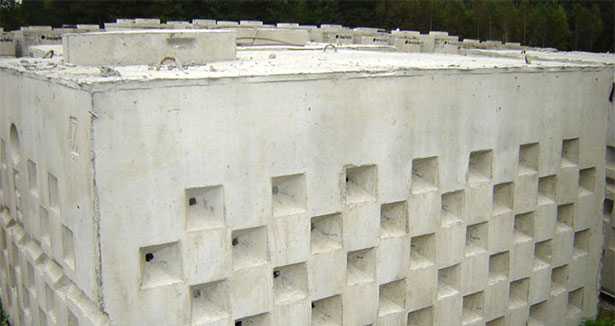
 For a manufacturer of structures doing business in Québec, BNQ certification is an excellent calling card. The BNQ has therefore established a certification program to certify waste water treatment structures based on four documents, including BNQ protocol 3682-925. This protocol establishes procedural rules and marking requirements applicable to prefabricated septic tank certification in accordance with BNQ 3680-905, to prefabricated holding tanks in accordance with BNQ 3682-901 and to prefabricated absorbing well structures to BNQ 3682-850.
 The certification of wastewater treatment systems is vital to marketing and useful both for manufacturers interested in obtaining recognition of the conformity of their stand-alone wastewater treatment systems as well as individuals responsible for enforcing the
 Manufacturers of onsite domestic wastewater treatment technologies have everything to gain by having their products certified since certification is the consumer’s guarantee of quality and reliability. A manufacturer may therefore have its treatment technologies certified under the BNQ certification program specifically created for that purpose. The program is based on the CAN/BNQ 3680-600 standard and the BNQ 3680-900 certification protocol, which specifies the steps that manufacturers must follow to show that they conform to the requirements applicable to the products submitted for certification.